
If you’re investing in IPOs or planning to start, you’ve probably heard about IPO GMP (Grey Market Premium). When I first came across this term, I was honestly a bit confused too. But as I explored more, I realized that understanding what is GMP in IPO is something every investor should know before applying. That’s why I decided to write this article—to explain it simply so you don’t face the confusion I did.
In simple terms, an IPO (Initial Public Offering) is when a company offers its shares to the public for the first time. GMP, or Grey Market Premium, is an unofficial price that indicates the demand for that IPO before it gets listed. Many investors check IPO GMP to estimate potential listing gains, but from my experience, it should always be used as an indicator—not blindly relied upon.
What Is GMP In IPO?
When I started analyzing IPOs in more detail, I understood why IPO GMP meaning is crucial. GMP (Grey Market Premium) is the extra price at which an IPO share is traded in the unofficial grey market before its official listing.
For example, if an IPO is priced at ₹100 and its GMP is ₹40, it means in the grey market, people are willing to buy and sell that share around ₹140 before it officially hits the stock market. This gives a rough idea of how the market values the IPO in advance.
Now, about the grey market—it’s not an official exchange like NSE or BSE. It’s an unofficial marketplace where buyers and sellers trade IPO shares before listing. From my observation, a high GMP often indicates strong demand and positive investor sentiment.
However, since the grey market is unregulated, these prices are not fully reliable. GMP should be treated as a guide, not a guaranteed outcome.
How Grey Market Premium (GMP) Works
Before investing in an IPO, it’s important to understand how GMP works in IPOs. The grey market sets GMP based on supply and demand:
If an IPO generates excitement and investor interest is high, its GMP rises.
If interest is low, GMP can fall—or even turn negative.
Example: If a company’s IPO price is ₹100 and the GMP is ₹50, investors in the grey market value the share around ₹150. This gives a rough estimate of what the listing price might be.
From my experience, the actual listing price may not always match GMP. Market conditions can change last minute, causing the listing price to vary. Therefore, GMP is a helpful indicator but not a prediction.
How To Calculate GMP
Calculating GMP is simpler than it seems. All you need is the IPO’s issue price and the current grey market premium.
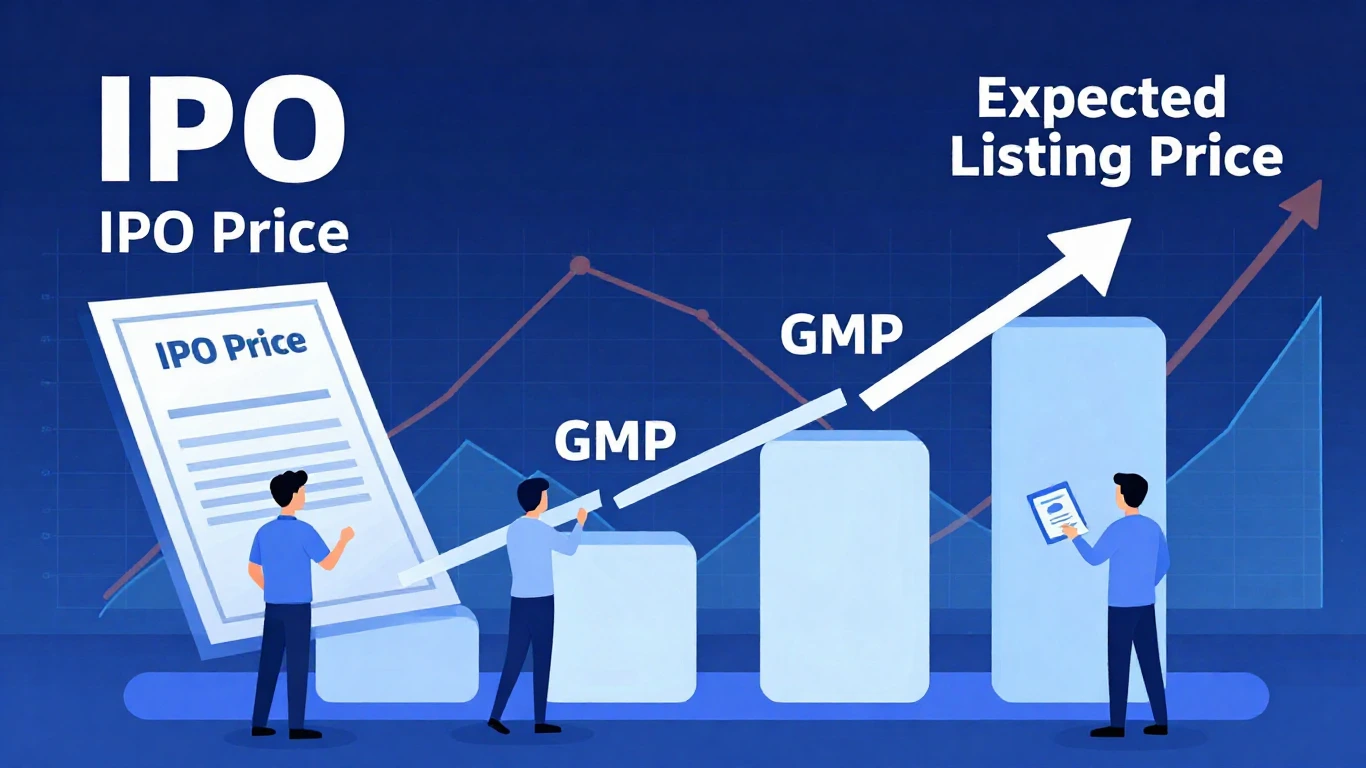
Formula: Expected Listing Price = IPO Price + GMP
Example: If an IPO is priced at ₹120 and its GMP is ₹30, the expected listing price would be around ₹150.
Many investors use this formula to estimate listing gains, but remember: it’s only an approximation. Actual listing prices can differ due to market conditions, demand, and overall investor sentiment.
Why IPO GMP Is Important
GMP is more than a number—it reflects market sentiment. Here’s why it matters:
- Predicting Listing Gains: A high GMP usually indicates the listing price could be higher than the issue price. From my experience, it helps investors gauge potential short-term profits.
- Understanding Market Sentiment: Rising GMP suggests investors view the company positively, while falling GMP signals weaker sentiment.
- Indicating Demand: GMP shows the strength of IPO demand. High GMP = strong demand; low or negative GMP = weak interest. Oversubscribed IPOs usually have strong GMP.
Tip: Always use GMP as a guideline, not the sole basis for investment decisions.
Risks of Grey Market Premium (GMP)
While GMP is useful, there are risks every investor should know:
- It’s Not Official: GMP is not provided by NSE, BSE, or any regulatory authority. All numbers come from unofficial sources.
- Possibility of Manipulation: Grey markets are unregulated. GMP can be artificially inflated or deflated, potentially misleading investors.
- Not Always Accurate: Market conditions can change suddenly, making actual listing prices differ from the GMP estimate.
From my experience, treat GMP as an indicator, not a guaranteed outcome.
Should You Trust GMP?
Whenever I consider applying for an IPO, I check the GMP—but I don’t blindly rely on it. It’s a helpful signal, but it’s not enough for final decisions.
- Partial Trust: GMP gives an idea of market sentiment and possible listing performance.
- Caution: Don’t ignore fundamentals, company financials, and market conditions. Long-term returns come from strong companies, not just high GMPs.
FAQs About GMP In IPO
1. What is GMP in an IPO?
GMP (Grey Market Premium) is an unofficial price indicating the demand for an IPO before listing. Simply put, it’s the extra premium investors are willing to pay over the issue price.
2. How can I check GMP?
You can track GMP on financial websites, IPO platforms, or Telegram channels providing daily updates. Many sites maintain a “IPO GMP today” section.
3. Is GMP accurate?
No, GMP is an estimate based on market sentiment. Actual listing prices can differ.
4. What does a negative GMP mean?
A negative GMP indicates weak demand in the grey market. Investors may trade below the issue price, usually signaling a weaker listing.
Track all upcoming IPOs to make the most of GMP predictions.

I’m Satyam. I have been investing in the stock market for the past three years and continuously learning to understand market trends and financial insights. I have completed my B.Com and I enjoy learning new things and sharing useful knowledge with people in a simple and clear way. As a content writer, my goal is to create content that is accurate, helpful, and practically valuable for readers.